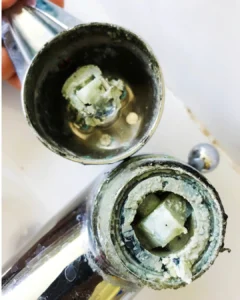
Apartments are where Bangalore’s hard-water problem often bites hardest. Most complexes rely heavily on borewell and tanker water, and that water is usually hard — so residents deal with limescale, dry skin and hair, and geysers and washing machines that fail early. Here is how to choose the right water softener for an apartment, whether you are treating one flat or the whole building.
Why apartments in Bangalore get hard water
Many complexes sit away from the piped Cauvery network, so they run on borewell and tanker supply — usually hard, with high calcium and magnesium. Cauvery water is softer, but even Cauvery-fed buildings often top up with borewell or tanker water when supply runs short, which pushes hardness back up. The result is the familiar signs of hard water across the whole building.
Two ways to solve it: one flat vs the whole community
There are two routes, and the right one depends on whether you are acting as an individual flat owner or on behalf of the whole complex.
For a single flat
An electronic water conditioner is usually the best fit for a flat because it:
- Is compact and mounts on the incoming water pipe — no bulky tanks
- Is salt-free with no wastewater, so it needs no drain for backwash (a real constraint in flats)
- Needs almost no maintenance — no salt to buy, store or refill
- Protects every tap, your geyser, washing machine and tiles from scale
For drinking water, add an RO or UV purifier at the kitchen tap. On a smaller budget, a bathroom softener or tap and shower filters treat specific points rather than the whole flat.
For the whole apartment community
Treating the common supply once protects every flat. A central softening or RO plant is installed at the main inlet or the overhead or underground storage tank, sized to the building — commonly 8,000 to 14,000 LPH for a mid-size complex. This usually needs the association’s or builder’s approval, and we assess the tank setup and daily water load on-site before recommending a system.
Why a salt-based whole-house softener is tricky in flats
Traditional resin-and-salt softeners need space for the tank, somewhere to store and load salt, and a drain line for periodic backwash — all hard to arrange inside a flat. That is why, for individual apartments, a salt-free electronic conditioner is usually the practical choice. In independent homes and villas, where there is space and a drain, a salt-based softener is often ideal.
Apartment water softener cost in Bangalore
| Option | Best for | Typical cost |
|---|---|---|
| Electronic water conditioner | A whole flat | ₹30,000 – ₹60,000 |
| Bathroom softener / point-of-use | One bathroom | Lower, on request |
| Community plant (8,000 LPH) | ~30-flat complex | ~₹1 lakh |
| Community plant (14,000 LPH) | Larger complex | ~₹2 lakh |
All systems carry a 3-year warranty and typically last 20+ years. See the full water softener cost guide for what changes the price.
How to choose — start with a free test
Every building’s water is different, so we measure first. A free on-site water test gives you the exact hardness reading and an honest recommendation — a flat conditioner, point-of-use units, or a central plant for the community. We install and service apartments across Bangalore, including HSR Layout, Whitefield and Sarjapur Road.
Frequently Asked Questions
What is the best water softener for an apartment?
For a single flat, an electronic water conditioner — compact, salt-free, low-maintenance and no drain needed. For a whole community, a central softening or RO plant at the inlet or storage tank.
Can you install a water softener in a flat?
Yes. An electronic conditioner fits on the incoming water line of a flat without tanks, salt or a backwash drain. We confirm the setup during a free visit.
Do we need society approval for an apartment water system?
For a single flat, usually no. For a central system that treats the whole building’s supply, yes — the association or builder needs to approve it, and we help with the assessment.
How much does an apartment water softener cost in Bangalore?
Around ₹30,000–₹60,000 for a flat and ₹1–2 lakh for a community system, depending on hardness and building size. You get the exact price after a free water test.
Salt-free or salt-based for a flat?
Salt-free (an electronic conditioner) is usually better for flats — no salt, no wastewater, no drain. Salt-based softeners suit independent homes with space for the tank and a drain line.